Protecting Area Rugs from Desert Dust in St. George Homes
Living in St. George and throughout Southern Utah means enjoying sunny weather, striking red rock scenery, and an active outdoor lifestyle. It also means dealing with fine desert dust. Carried by afternoon winds or tracked inside on footwear and pet paws, microscopic grit quietly enters every home. For homeowners who appreciate fine textiles, protecting area rugs from desert dust is an essential part of preserving their beauty, comfort, and structural integrity.
Unlike standard indoor dust, which consists mainly of soft textile lint and skin cells, Southern Utah dust is mineral-rich. It contains pulverized sandstone, silica, and alkaline soils native to the surrounding desert terrain. When these particles settle into an area rug, they do not simply rest on the surface. Fine desert sediment sifts deep toward the rug foundation, quietly accelerating wear whenever anyone walks across the floor.
The Hidden Mechanics of Desert Soil: How Fine Grit Damages Fibers
To protect your rugs effectively, it helps to understand how desert soil affects textile fibers at a microscopic level. Silica and quartz particles possess sharp, irregular crystalline edges. When fine dust settles deep into a rug pile, everyday footsteps press those abrasive grains against delicate wool, silk, or cotton strands. This friction slowly saws into the fiber shafts.
Over time, this mechanical abrasion strips the natural luster from wool and frays fiber tips. What homeowners often mistake for normal high-traffic dullness is frequently the cumulative result of microscopic cutting. In natural-fiber rugs, constant friction gradually wears down the pile and weakens the foundation knots long before the rug should reach the end of its lifespan.
The Downward Migration of Dense Mineral Sediment
Desert dust is surprisingly dense compared to ordinary household lint. While lightweight surface dust lifts away with gentle suction, dense mineral silt migrates downward through the rug pile under the natural vibration of regular foot traffic. Within weeks, fine grit packs tightly into the warp and weft foundation. Once settled there, standard home vacuums cannot easily dislodge it, even if the rug surface appears clean to the eye.
Four Warning Signs Trapped Grit Is Compromising Your Rug
Because grit settles deep at the base of the pile, an area rug can look presentable while holding pounds of abrasive soil. Look for these four practical warning signs:
- The Palm Slap Test: Lift a corner of the rug and give the back a firm slap with your palm over a clean hard floor. If a cloud of dust rises or a powdery silhouette appears on the floor beneath, deep soil has compacted inside the backing.
- A Gritty or Stiff Pile Texture: Run your fingers through the rug pile down to the foundation. If the fibers feel gritty or stiff rather than soft and flexible, mineral dust has coated the fiber shafts.
- Persistent Dulling of Natural Colors: When fine alkaline dust coats wool scales, it diffuses light, making rich reds and earth tones appear faded, chalky, or hazy even after a vacuuming session.
- Fine Powder Underneath the Rug Pad: Check the floor beneath your rug pad. A layer of powdery silt on the hard floor indicates that sand has sifted entirely through the rug backing and is grinding between the pad and your flooring.
Preventative Habits: Stopping Desert Dust at the Perimeter
The easiest way to protect fine area rugs is stopping grit before it crosses your threshold. In St. George, where desert trails, garden gravel, and dusty yards are right outside the door, defensive household habits make a significant difference.
Establish Entryway Barrier Zones
Place sturdy, weather-resistant scraper mats outside all exterior doors to catch coarse sand before shoes enter. Add an absorbent, washable runner inside the doorway to trap finer silt. Encouraging family and guests to remove outdoor footwear at the door prevents heavy downward shoe pressure from grinding sharp gravel particles into interior rugs.
Wipe Pet Paws After Outdoor Walks
Southern Utah pets pick up fine red dust on their paws and coat during daily strolls. Keep a damp microfiber towel near main entry doors to wipe paws before dogs head into living areas, preventing red soil from working into natural rug fibers.
Manage Ventilation During Windy Afternoons
Canyon winds often kick up airborne dust across Southern Utah. Keep windows and patio doors closed during windy afternoons, and change home air filters regularly to catch airborne particulates before they settle on rugs.
Why Protecting Area Rugs from Desert Dust Requires Smart Vacuuming
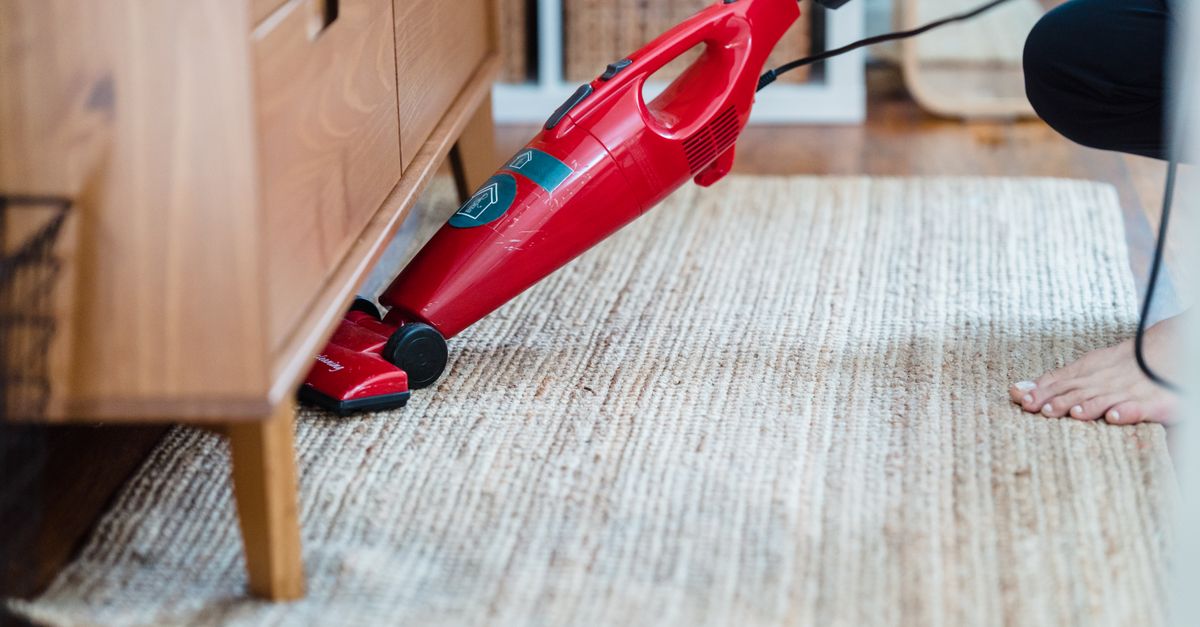
Routine vacuuming is your first defense against dust buildup, but improper techniques can damage delicate rugs. Many upright vacuums feature aggressive rotating brush rolls designed for synthetic wall-to-wall carpet. On hand-knotted or wool area rugs, these spinning bristles can fuzz the pile and tear hand-tied fringes.
- Turn Off the Beater Bar: When vacuuming wool, silk, or handmade rugs, turn off the brush roll or use suction-only mode with a flat floor tool.
- Use Slow, Overlapping Passes: Rushing across the rug does not create enough airflow to lift heavy mineral soil. Take slow strokes in the direction of the pile to draw out loose dust.
- Keep Away from Fringes: Never run a vacuum over rug fringes. Rotating brushes can snag fringe yarns, unraveling end knots. Vacuum across the width and stop several inches before the fringe.
- Vacuum the Underside Periodically: For sturdy wool rugs, turn the rug face down on a clean hard floor and gently vacuum the back using suction only. This loosens compacted grit from the foundation so it drops onto the floor.
Common Mistakes St. George Homeowners Make with Dusty Rugs
When homeowners notice dust accumulating, good intentions can lead to unintended damage. Avoid these common mistakes:
- Beating Rugs Over a Deck Railing: Forcefully whipping a large rug over a railing can crack the foundation warp and weft fibers, particularly in dry desert conditions where natural yarns lose moisture.
- Using Rental Carpet Shampooers or Steam Units: Running a wet carpet machine over an area rug packed with dry desert silt turns dust into dense mud. As the rug dries slowly, that muddy residue hardens in the backing, leaving the foundation brittle.
- Applying Deodorizing Powders: Scented powders sift into the rug backing where home vacuums cannot reach them. In dry climates, these powders bond with desert silt and create stubborn residues.
How Rug Materials Differ in Their Resistance to Desert Dust
Different fibers handle fine desert soil in different ways:
- Wool Area Rugs: Wool naturally hides dry dust due to its crimped structure. However, trapped silica acts like fine sandpaper against wool scales. Gentle suction vacuuming and periodic washing protect its natural resilience.
- Silk and Viscose Rugs: Silk and delicate viscose fibers have low abrasion tolerance. Desert dust scratches these filaments quickly, causing dullness and pile crushing. They require gentle care and professional dry-soil removal.
- Flat-Weave and Cotton Rugs: Flat weaves lack vertical pile, so dust lodges directly in the woven foundation. They benefit from frequent turning and regular vacuuming of both sides.
- Synthetic Rugs: Synthetic fibers often generate static electricity in dry climates, attracting dust. While durable, they still develop dingy traffic paths when fine soil binds with household oils.
The Value of Specialized Professional Dusting and Washing
Even with careful vacuuming, fine Southern Utah soil eventually packs deep into a rug foundation. Household vacuums simply do not have the airflow or mechanical action needed to evacuate compacted mineral silt safely.
Professional facility-based rug cleaning starts with dry mechanical dusting before any liquid is introduced. Using gentle harmonic vibration or compressed air, pounds of abrasive silt are shaken free from the foundation without stressing fibers. Once the dry grit is removed, the rug receives a pH-balanced submersion wash and thorough clear-water rinse to flush away residue and restore fiber elasticity.
With consistent preventative habits and gentle vacuuming, protecting area rugs from desert dust is simple and manageable. When your rugs need a restorative, deep wash to clear out seasons of Southern Utah red sand and soil, professional care will help them last for generations. For expert, fiber-safe care in our community, St George Rug Cleaning provides thorough, tailored rug cleaning for every type of area rug.